TL;DR
When you’re comparing deck drainage products, one installation detail quietly separates the reliable systems from the riskier ones: whether the system depends on caulk, sealants, glue, or solvents to stay watertight. Every sealed seam is a potential failure point, not to mention a labor step that adds time and cost. DEK Drain® requires none of them, installing in long runs with no joints to seal. Here’s why caulk-free matters, on installation day and for years afterward.
It’s a detail most shoppers never think to ask about.
When homeowners and contractors evaluate deck drainage systems, the conversation typically centers on material, installation position, and, of course, price. Those matter. But there’s a quieter question worth asking that can tell you a lot about how a system will hold up.
What holds it all together?
Many drainage systems rely on caulk, sealants, adhesives, or solvents to seal their seams and connections and keep water from escaping. It’s easy to overlook at the time of purchase, but that dependency shapes both how the system installs and how long it continues to perform.
The Hidden Role of Sealants
In a sealant-dependent system, water resistance isn’t built into the material itself, it’s created at installation, bead by bead and seam by seam. Tape joins one section to the next. Caulk seals the gaps. Adhesive holds things in place. On installation day, if done correctly, it all works.
The catch is that the system is now only as watertight as those seals, and seals don’t last forever.
Every Sealed Seam Is a Potential Failure Point
Caulk and adhesives live a hard life under a deck. They’re exposed to moisture, temperature swings, and ultraviolet light. Over time, they do what sealants do. They dry out, lose adhesion, crack, and pull away. When this happens, the seam they were protecting becomes a leak. The dry space below, along with the framing above, is no longer protected.
The more seams and sealed connections a system has, the more of these potential failure points it carries. Each one is a spot that must be treated correctly on day one and then maintained through years of weather. A single failed bead of caulk in the wrong place can undo the whole point of the system.
Sealants Add Labor, Mess, and Cure Time
The risk isn’t only long-term. Sealant-dependent installation is slower and more demanding in the moment, too. Applying caulk and adhesives is a skill, no doubt about it. But do it unevenly, miss a spot, or work in the wrong temperature or humidity, and the seal may not hold. There’s cleanup to manage, and there’s curing time to wait for before the job can be truly considered finished.
For a contractor, every one of those steps is labor, and every judgment call is a chance for an error that shows up later as a callback. For a homeowner, it’s a reminder that a system is only as good as the care taken with its messiest, most weather-sensitive step.
The Caulk-Free Alternative
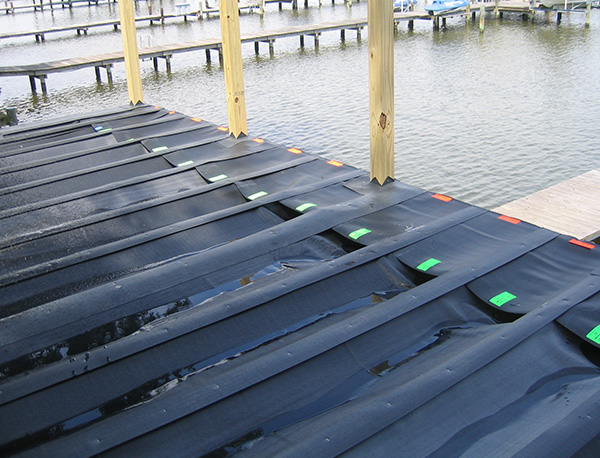
At DEK Drain®, our systems remove sealants from the equation entirely. Installation requires no glue, caulk, adhesive, or solvents — ever. Instead of relying on sealed connections to stay water-resistant, the rubber membrane installs in long runs with no joints to seal, so there simply aren’t the seams a dependent system has to protect in the first place.
Panels arrive pre-cut to fit each joist bay and install with common tools, working with gravity rather than against it. There’s nothing to mix, apply, smooth, or wait on while it cures. Water resistance is a property of the system itself, not something created with a caulk gun at the end of a long day.
What Caulk-Free Means on Installation Day
Removing sealants from the process makes installation faster, cleaner, and far less finicky. There’s no cure time holding up the schedule, no weather window to worry about for adhesion, and no messy cleanup. The install doesn’t hinge on getting dozens of beads of caulk exactly right. That’s a simpler, more predictable job for a contractor — and one less thing for a homeowner to wonder about afterward.
What Caulk-Free Means Over Time
The longer-term payoff? Reliability. There’s no caulk to crack, no adhesive to let go, and no seals to inspect or reapply down the road. A system that never depended on sealants in the first place can’t fail at them. It’s no accident that DEK Drain® backs its systems with the only fully transferable, non-prorated limited lifetime warranty in the category. It’s a promise that’s far easier to make when watertightness isn’t riding on a bead of caulk.
The Bottom Line
When you’re choosing a deck drainage system, how it stays watertight is as important as how it installs. Systems that depend on caulk, sealants, glue, or solvents carry added labor up front and added failure points for years afterward. A caulk-free system like DEK Drain® avoids both. In short, we deliver a cleaner, faster install, and fewer things that can go wrong once the deck boards are down and the seasons start to turn.
Questions? We’re always on call and ready to help. Reach out to our team today.
***
FAQs
Why do some deck drainage systems need caulk or sealant?
Many systems create their watertight seal at installation, using tape, caulk, or adhesive to join and seal seams between components. Their performance depends on those seals holding up over time.
Why is that a risk?
Sealants exposed to moisture, UV, and temperature swings eventually dry out, crack, and lose adhesion. When a seal fails, the seam it protected can leak — so every sealed connection is a potential future failure point.
How does DEK Drain® stay watertight without sealant?
Our rubber membrane installs in long runs with no joints to seal, so there aren’t the seams a sealant-dependent system has to protect. Watertightness is built into our products rather than created with caulk or glue.
Does caulk-free installation really save time?
Absolutely. With no adhesive to apply or cure, no weather window to manage for adhesion, and no cleanup, the install is faster, cleaner, and more predictable, with fewer steps where something can go wrong.
What does caulk-free deck drainage mean for long-term maintenance?
There’s no caulk to crack or re-apply and no seals to inspect. A system that never relied on sealants doesn’t develop leaks that come from sealants failing.